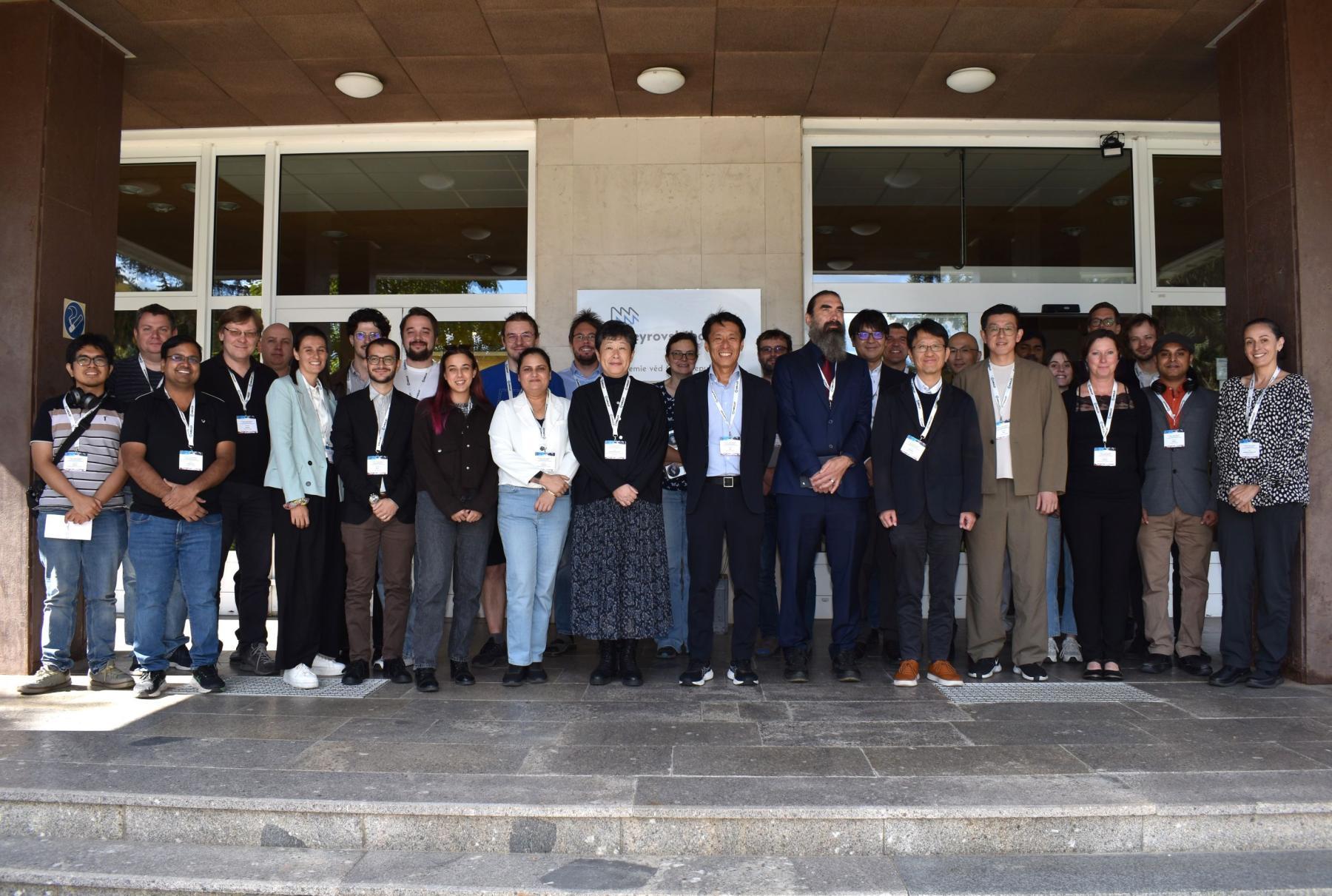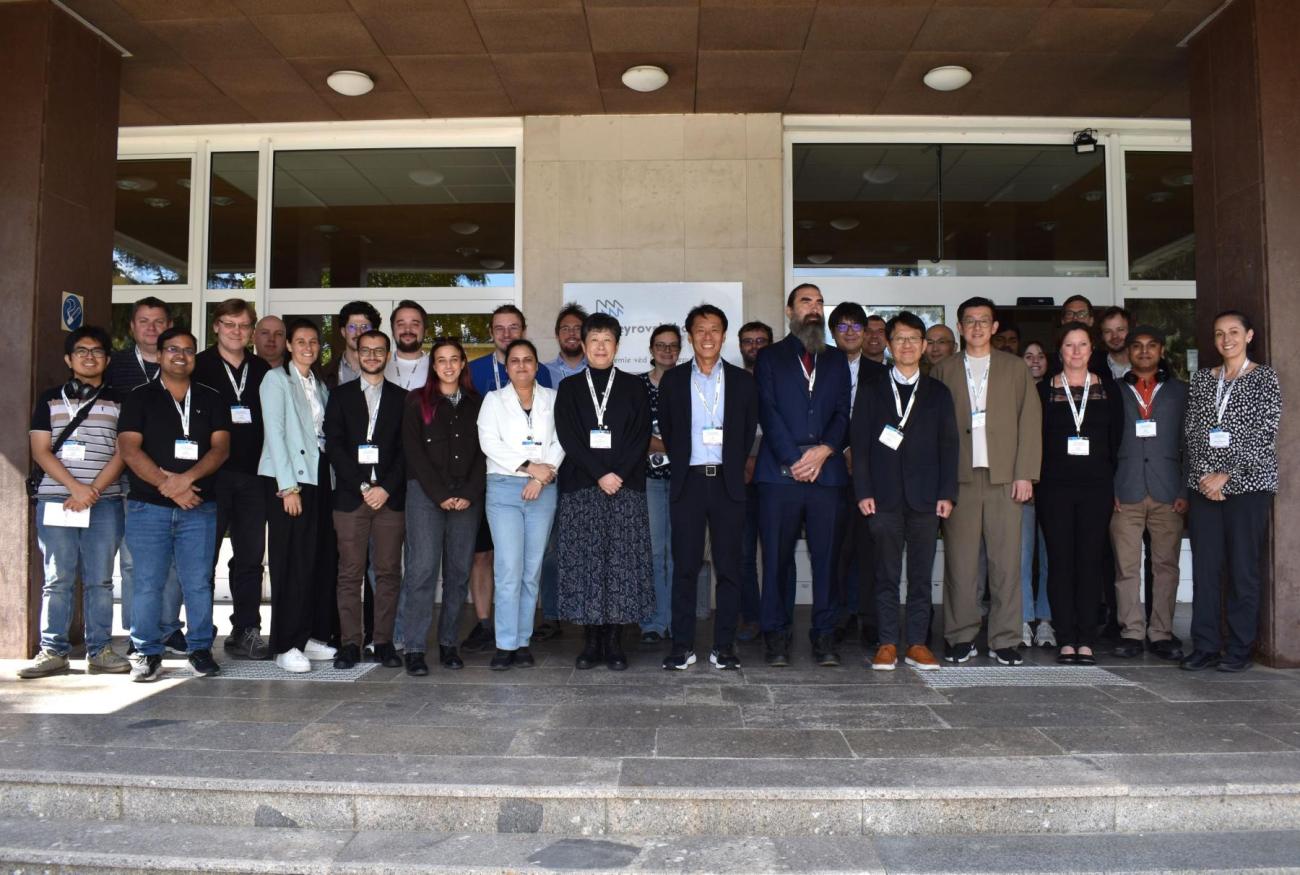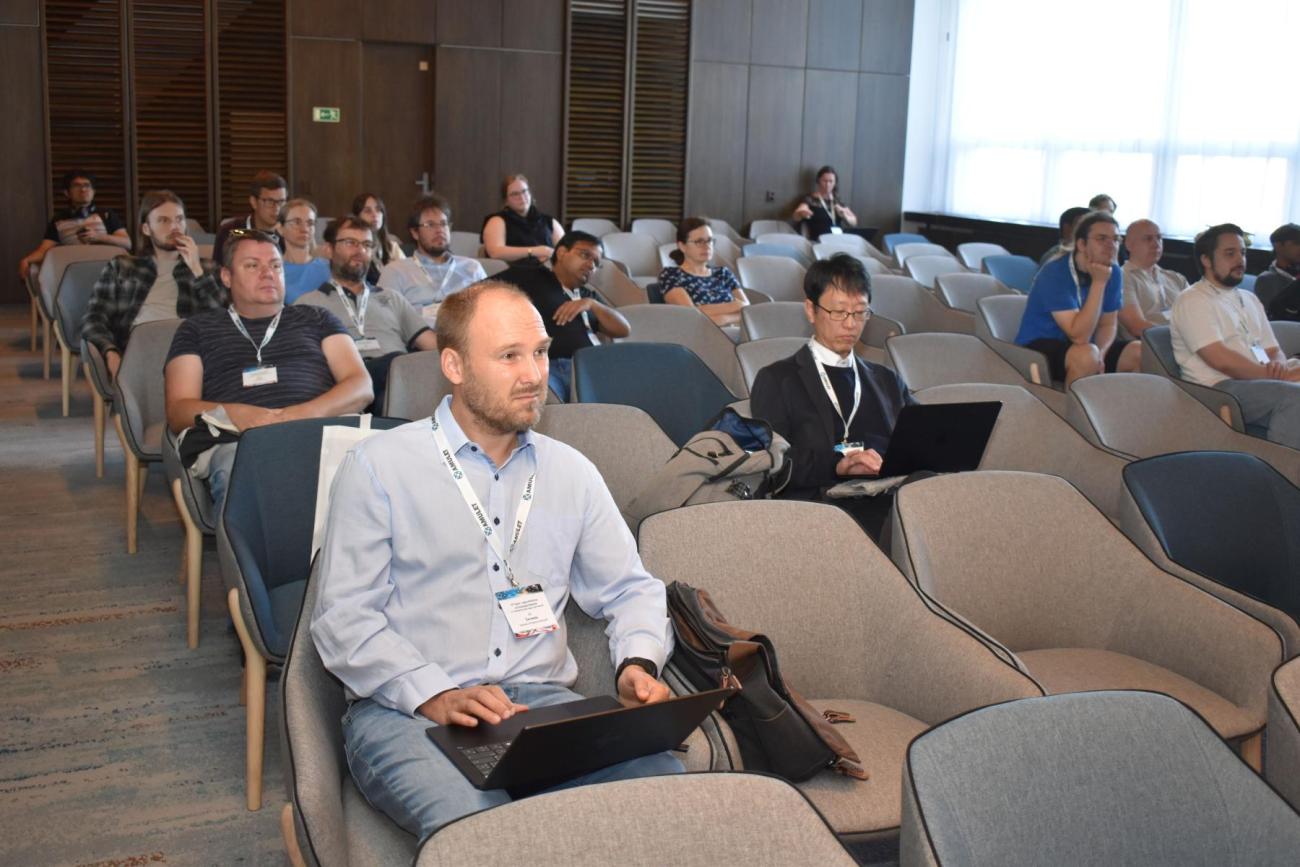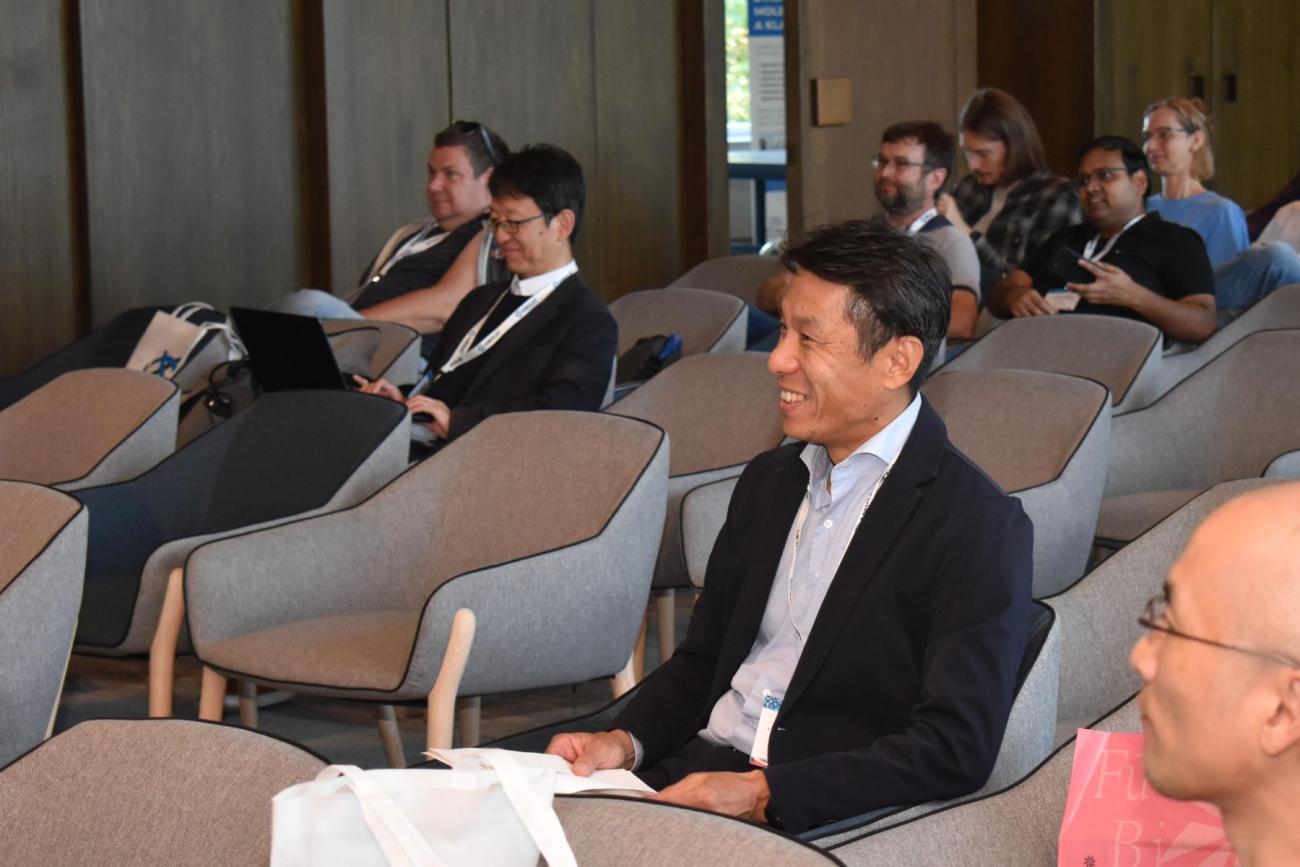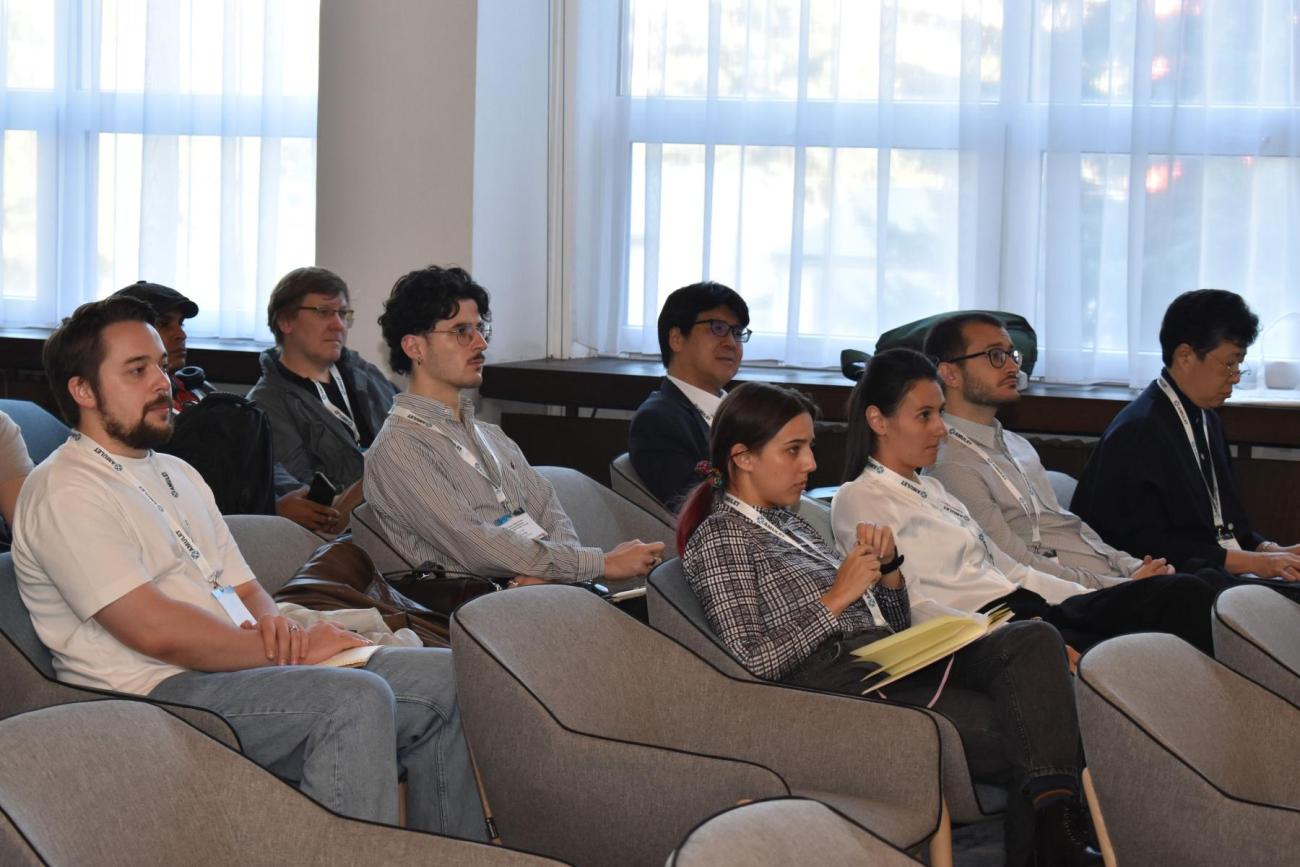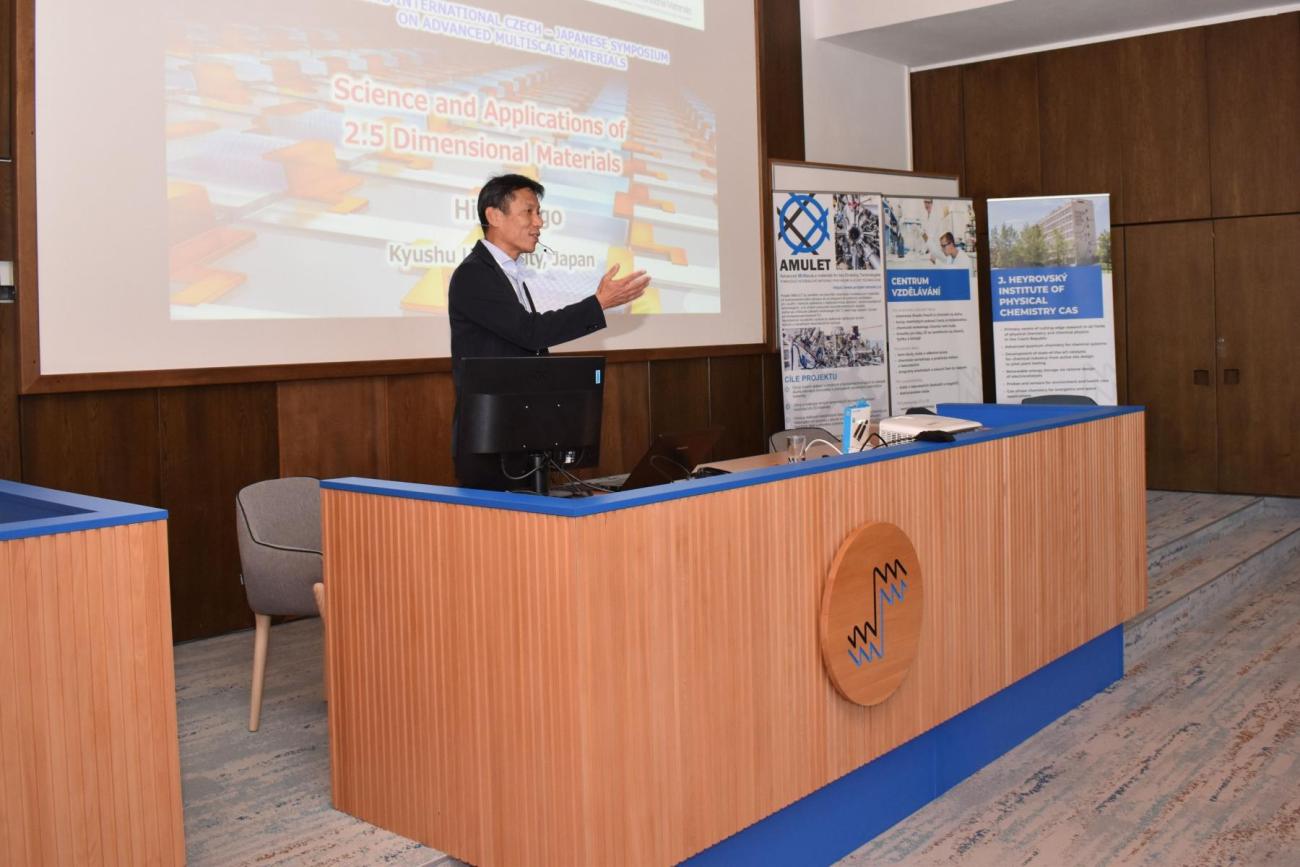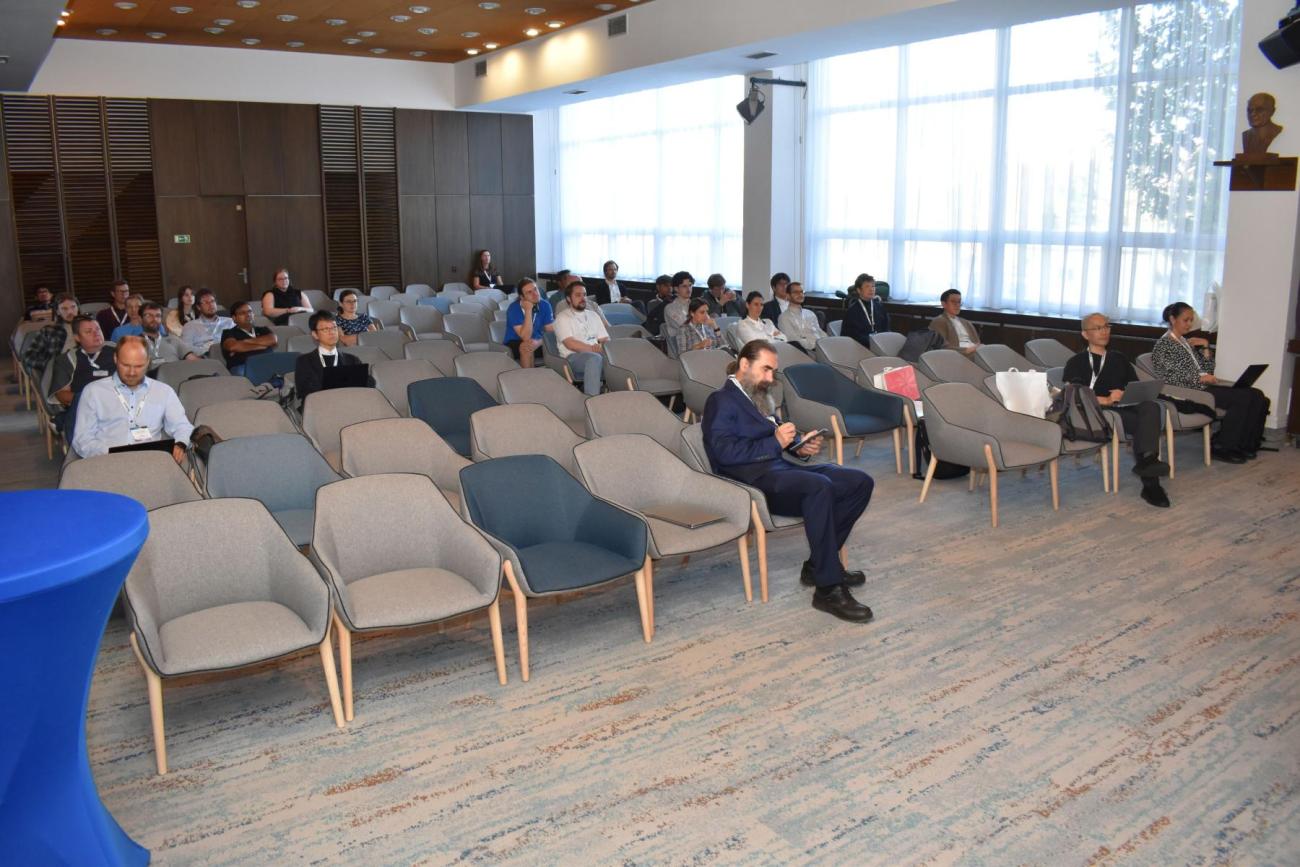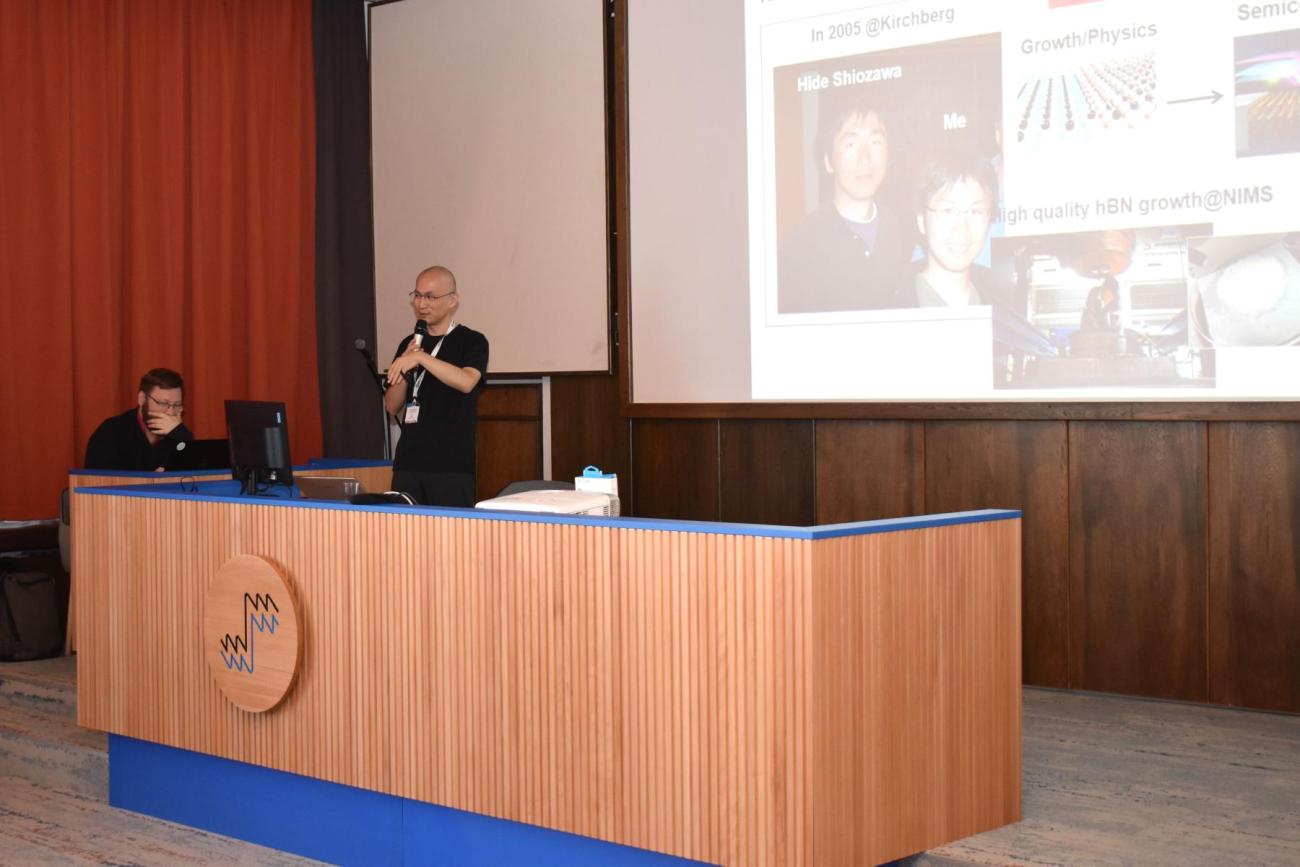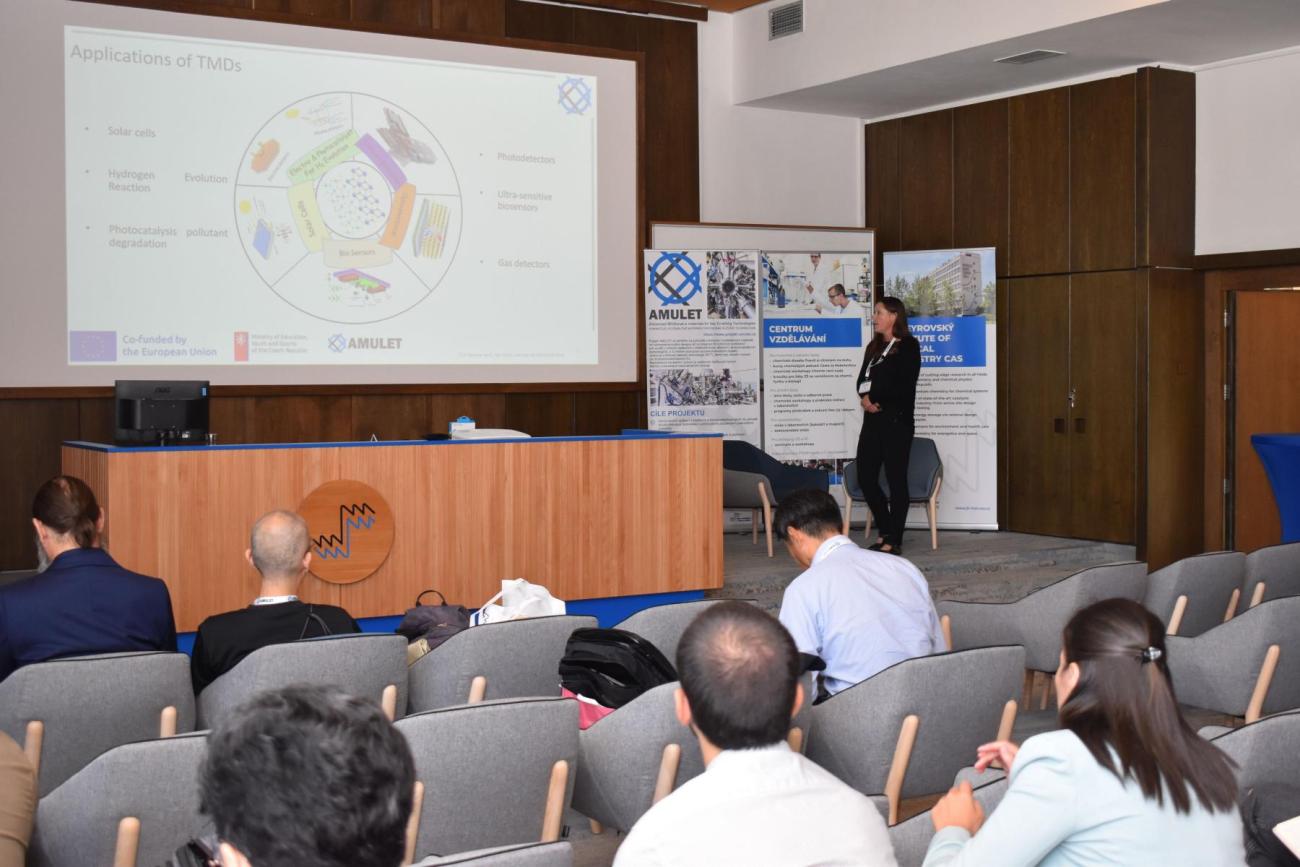



From 16 to 19 September 2026, the second Czech–Japanese Symposium on Advanced Multiscale Materials took place in the Brdička Lecture Hall at the Heyrovský Institute of the CAS in Prague as part of the AMULET project. Building on the first symposium held in 2024, the meeting presented the latest scientific advances while also exploring new opportunities for long-term collaboration between Czech and Japanese research teams. Jana Kalbáčová Vejpravová from the Faculty of Mathematics and Physics, Charles University, has long played an important role in fostering this cooperation, systematically building and strengthening ties with leading Japanese research institutions. Together with Martin Kalbáč, she co-chaired the symposium. Czech–Japanese scientific relations have a tradition spanning more than a century, with the collaboration between Jaroslav Heyrovský and Masuzo Shikata among their early milestones.
The main day of scientific talks focused primarily on 2D and 2.5D materials, nanotechnology, energy, and quantum technologies. A number of leading researchers from Japanese institutions accepted the invitation, including Hiroki Ago from Kyushu University, Yasumitsu Miyata from the National Institute for Materials Science, Kazunari Matsuda from Kyoto University, Yukiko Yamada-Takamura from the Japan Advanced Institute of Science and Technology, Toshiaki Kato from Tohoku University, Hidehiro Sakurai from The University of Osaka, and Tomoki Machida from the University of Tokyo. Together with their Czech colleagues, they presented research ranging from the fabrication and control of two-dimensional materials to nanoscrolls, van der Waals heterostructures, zinc-ion batteries, and nanodiamonds for quantum sensing.
A major theme of the symposium was the targeted design of materials at the atomic and nanometre scales and their use in emerging technologies. The presentations highlighted the potential of 2D and 2.5D materials in electronics, optoelectronics, photonics, catalysis, sensing, and quantum devices. Topics included robotic fabrication of 2D materials for quantum technologies, control of their structure and symmetry, novel epitaxial materials, superconducting graphene structures, and the use of modified graphene to study lipid membranes by super-resolution optical microscopy. In this way, the programme connected fundamental materials research with concrete pathways towards future applications.
Equally important to the scientific presentations was the search for opportunities to further develop Czech–Japanese cooperation. Round-table discussions addressed funding for joint research through Horizon Europe and bilateral projects, mobility schemes and joint experimental projects within AMULET, as well as opportunities for joint degree programmes and exchanges of students and postdoctoral researchers.
The symposium was held within AMULET – Advanced MUltiscaLe materials for key Enabling Technologies. The project focuses on advanced engineering of multiscale materials, from sub-nanometre design to their integration into functional architectures for applications including electrical engineering, medicine, and environmental technologies, while also assessing their socioeconomic impacts. These areas fall within Key Enabling Technologies (KETs), which are of major importance for the competitiveness of the European Union. The project’s interdisciplinary research builds on collaboration between leading research teams and extensive international links; the meeting of Czech and Japanese researchers is a concrete example of how these international synergies can be further strengthened.